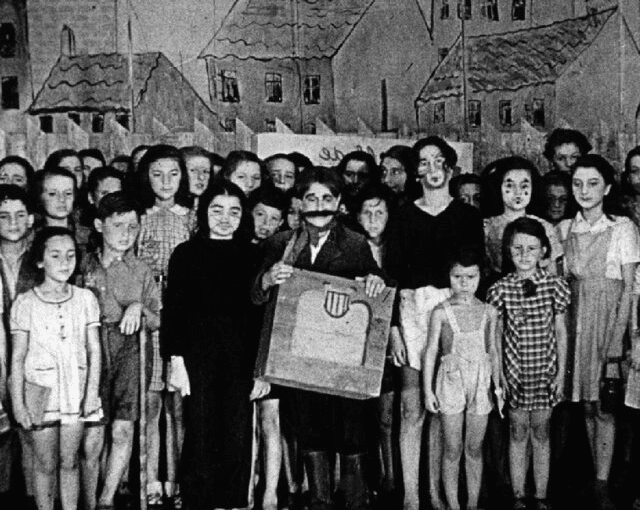
I finally wrote music for an album coming out soonish. I’ve been asked to create liner notes. I’ve been toying with the idea of just releasing all the programs that generated the music, bugs and all.
Here’s a rough draft of some words. Feedback is very welcome. Writing about music is like dancing about architecture. I’ve seen somebody dance about architecture and it looked hard.
Like a painter painting the same lake over and over, these are explorations of a set of algorithms for picking rhythms and pitches. They were mostly made during the first 60 days of the year 5786, between the holidays. They look to the year ahead, but are not burdened by hope.
As the year draws to a close, what stood out most was accelerated climate change. These pieces use algorithms, but ones that are handmade. I wrote all of the programs by hand on my own computer. Digital music will never be as low carbon as bamboo flutes, but it doesn’t need dedicated data centres either.
Thank you to Ellen Fullman for useful feedback.
This album is dedicated to the memory of Alex Lipkin, who died of climate change over the summer.
These are my unstructured Error Camp thoughts, which are a few days out. My Error Camp visit was in a context, wherein I was struggling to finish a large project beforehand and working long hours and then set off for a long trip the day after I got home from camp. I’m writing these thoughts on a boat between Germany and Lithuania.
Error Camp and some other computer music gatherings (but, sadly not all) feel like building a temporary utopia. In some ways, it reminds me of my Masters Degree, where the most important conversations were in the hallways and around seminar tables, always right before the class began. The closer we got to the cutoff, the more it felt we were on the verge of a breakthrough. I spent years thinking about how to prolong that liminal moment. Our temporary communities are liminal moments in that vein.
But the liminal moments of EC are often non-verbal. It’s a shared activity. I wish we could stretch it out like a degree programme, but it’s also been intimately tied to the weather and climate. Britain is very seasonal and Error Camp seems structured around summer and festivals.
There was less dancing than I expected – I somehow missed the maypole. But there was more interaction with sheep. I may prefer cabin bunks to camping in a tent, but that’s a weak preference. I wish the cycle commute was less arduous or I was better prepared, which I could have been. It was good to be in a space and feel fully present. I appreciate the diversity of participants in skill and experience. I don’t live code very often and sometimes wonder whether I belong, but didn’t experience that this time. I was also happy to hear a clarinet and other instruments. The overlap between what’s included and my own practices seems to be growing, which I like for selfish reasons and also because I tend to favour wider focuses more generally.
The idea to make zines was brilliant. My family used to subscribe to many BASIC magazines, including one called Family Computing, so this was doubly nostalgic for me. I want to take this out to the permacomputing community. The weird language show and tell was also brilliant. I used to feel intimidated that so many live coders seemed to eventually write their own live coding language. This was a mixture of created and found, which felt much more approachable. (Also, it turns out that a small live coding language can be easier to write than I feared.)
There was a trend of restorative workshops – yoga, meditation, Deep Listening, harmonic singing. All of them rooted in corporeality. This feels both needed for our own well-being and like a direct and important challenge to California Ideology 1ideas like the ‘Declaration of the Independence of Cyberspace’ which pretends bodies do not exist in order to erase recognitions of embodied conflicts, like racism or conflict minerals in our computers. We are not brains floating jars. Our equipment has a real human cost, which requires some mindfulness at the very least. We are humans. Our music is human. We have bodies with needs and wants.
I have hopes – that we can take the spirit of sharing and building out into the world and grow a movement of digital sovereignty. I have fears of replicating the libertarian mistakes of past decades and of art washing. Art and activism should be able to operate in separate spheres, but we came to this camp at a moment of profound crisis. Our rights are in peril. The world is heating. At the end of June, a friend of mine died of heatstroke. He is the first person I know of to die of climate change, but he won’t be the last.2
And so, I want us to be part of the solution. I want our values to include this. We have good points about social justice, but vulnerability to heat is so closely tied to injustice, that it is not enough to say that we won’t replicate unjust hierarchy – we have to work to mitigate the material conditions of structural violence.3 Because of our relationship with tech, this is, to my mind, within the scope of things we should be working on and I see possibilities for valuable interventions, which have gotten positive responses on Mastodon.
Also, being in a tech/art space that is mostly free of microaggressions is probably why these events feel utopic for me. There are ways in which the world is getting better because we are making it better.
I feel energised and have perhaps too many ideas to carry forward: a busking organ tour via bicycle; a series of workshops with performances in the old Open Lab model, but with a focus on hardware sustainability; algorave busking flashmobs; more zines; and what about hardware turing machines controlling acoustic instruments?
I hate that this is named after the place I came from. My grandparents certainly would not have recognised the ideas, dreamed up by people who came from other places. ↩︎
Can I take a moment here to ask people reading this to become aware of the signs of heatstroke? I won’t include them here, but please do look them up. It is a serious risk for people of every age group and state of health. ↩︎
This is a type of preventable harm caused by institutional neglect or hostility. Cyclists getting hit because of badly designed junctions, people in England who have malnutrition, and people who get heatstroke are all examples of structural violence. ↩︎
The state of Israel is doing war crimes. It’s enacting human rights abuses. It is in apartheid state. The government is fascist. They are a rogue state. This is a genocide.
It deserves condemnation, protest and an end to military aid. You can help by participating in BDS, writing your MP, protesting arms manufacturers and many more actions.
It is morally good to condemn the state of Israel in the strongest possible terms.
However, please be careful when you venture into the use of metaphor.
It can be tempting to compare Israel’s current actions to past atrocities and occasionally this is even a helpful illustration. However, when you’re picking which historical crime to use, I’m sorry, but it is counterproductive, unhelpful, and morally dubious to pick the Holocuast.
Unfortunately, there are loads of past atrocities and thus you have a wide variety of ones to pick as your metaphor, but you should avoid any that include millions of dead Jews.
Why?
Using the Holocaust as a metaphor is called “Holocaust Inversion”. You can DuckDuckGo it, but a lot of the results aren’t very good, so this is a summary:
Diasporic Jews and Triggering
Holocaust inversion is ironic! Its edgy! But we know that when edgelords use terms like ‘ironic’ they mean ‘triggering.’
Netanyahu is not reading your posts, but Jews in your country are.
Jews living around the world are part of a diaspora. Many or most could immigrate to Israel, but they’ve chosen not to.
There was a lot of movement of Jews in the 19th and 20th century as people fled violence. Many or most diasporic communities include people who lost family members in the Shoah.
Your neighbours don’t need your edgy, triggering quips. Your neighbours are not responsible for the crimes of a fascist government thousands of kilometres away.
So why do so many people grab this as a metaphor?
Westerners working through their feelings
When searching for references for this post, I found some material behind an academic paywall, so I want to quote a summary here:
“The Holocaust should have altogether put paid to anti-Semitism. It should have rebutted once and for all the principal anti-Semitic fantasy of malign Jewish power; it should have satiated the appetite of the most murderous anti-Semites for Jewish death. And yet instead it precipitated new anti-Semitic versions or tropes […]”.
It is a deeply puzzling question. In this chapter, Wistrich offers an answer to it by drawing on the work of the French philosopher, Vladimir Jankelevitch, who drew a connection between Israel, antisemitism and the Holocaust. Jankelevitch noted that the Holocaust had cast a shadow of remorse over the Europeans as they came to realise the magnitude of their crimes against the Jews. Wistrich argues persuasively that accusing Israel of behaving like Nazi Germany performs a psychological function for Europeans, because it acts as an “overcompensation mechanism” for discharging their latent guilt feelings about the “unspeakable crime of the Shoah”. Wistrich writes: ‘And what if the Jews themselves were no better than the Nazis? Why, that would be just wonderful. One would no longer have to feel sorry for them – after all, “they would have deserved their fate”.
Moreover, explains Wistrich, accusing Israel of being no better than the Nazis (and maybe even worse because the Jews failed to learn a lesson from their persecution) allows those with animus towards Jews to express it in the “politically correct” language of anti-Zionism. Thus, writes Wistrich, “those who accuse Israel of being a Nazi state kill two birds with one stone”.
One thing that’s missing from this summary is an exploration of the idea that the deaths of six million people should have been instructive. By this reading, Nazis were teaching us or doing us a moral favour by giving us a high ground. How lucky this could have been for us if only we hadn’t been too stubborn to take proper notice! And what is the solution for our failure to learn? More violence against us? This is part of why this argument is triggering.
Moreover, this mechanism of absolution of Holocaust guilt is similar to the assertion that homophobes are all secretly in the closet. It’s not true. Gay bashers are overwhelmingly straight. But if we believe that gay bashers are actually gay, then homophobic violence is a gay problem – something that gay people bring upon themselves.
The straight person who believes that gay bashers are gay never needs to change their rhetoric or their bigoted behaviour, let alone take actions to ally with LGBT people.
Blaming a community for their own oppression allows bigotries to fester and prejudice to grow. It leads to a situation that is worse for the community in question, including increased violence. And violence is certainly on the rise.
The Anglosphere
The US and the UK both failed to adequately respond to the refugee crisis in World War 2. We pat ourselves on the back because “we” won the war. (Spoiler: the Russians won the war.) But we also have our own guilt about our own atrocities. Britons invented the concentration camp. Nazis copied American ideas of Eugenics and Reservations. Ironically, the US’s “Indian Wars” are much more similar example to Israel’s current actions.
Meanwhile our failure to respond adequately to refugee crises has only gotten worse.
Actually working through our feelings
For some people, the injunction to pick a different atrocity will feel like an imposition. This could be a source of friction for you.
For me, I was raised in an environment with a lot of different social bigotries. When I feel a friction, that’s often a sign of some unconscious bias. Feeling something and not knowing why, for me, is an opportunity to figure out my values.
So if you’re feeling a friction, I’d really like to encourage you to sit with that difficulty for a while and query it.
Our emotions are neither good nor bad, but how we respond to opportunities to grow are what define us. Maybe this is an opportunity for you.
Decentring Palestinians
This is a long post, and all the way down here is the first mention of Palestinians. Instead, we’ve been talking about your Jewish neighbours, Europeans, North America and virtually everyone else aside from the people whose liberation we intend to support.
Sometimes, like with the Palestine Action ban, it’s our own governments that force us to lose focus on the goals we care about. But sometimes, it’s our own inability to actually focus our attention and effort.
I saw a picture the other day of some graffiti which said, “Gaza is freeing us.” But if we actually care about Palestinians, this is perverse.
Our first aim in any communication about the war should be whether it helps stop it and then whether it helps the victims. Decentring Palestinians to argue about a past war which Palestinians had nothing to do with, does not centre their needs. It does not aid Lebanese people. It doesn’t help Persians.
If you feel like you need a metaphor to talk about this war, I might first ask what the metaphor is intended to do. Is deliberately killing health workers, destroying schools, hospitals and universities is not clearly wrong enough without drawing a comparison?
But, again, if in the process of taking action to help stop the war, which could include participating in BDS, protesting, doing direct action, making signs and banners or putting those up somewhere or doing any one of tones of other potential things you can do, if you feel like you need a metaphor, do pick one that clarifies rather than obfuscates. Pick something other than the Holocaust.
Works Cited
Klaff, L., 2024. The three best chapters on holocaust inversion, recommended by Lesley Klaff. Fathom, 2024 (Winter).
My friend Evan suggested that I could just remove all the organ electronics and replace the MIDI jack and this would likely work without posing a danger to my laptop. So I finally did.
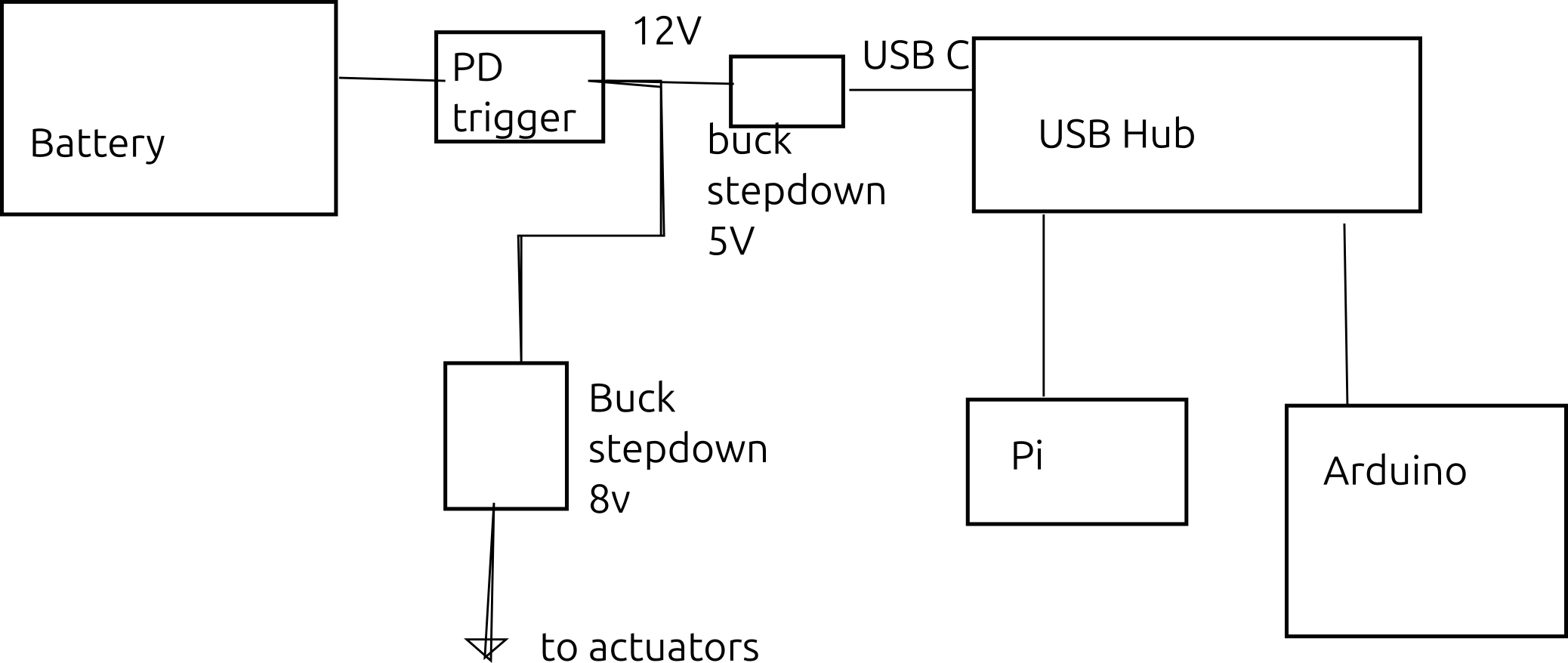
I replaced the original batteries with a phone charging battery from Argos. It goes to a PD trigger – a USB C board that tells the battery something is using it and draws a steady DC voltage. I’m drawing 12 volts.
This voltage is then split to go to two buck stepdown boards. The one currently in use is 8v, because the part of the organ in the wind chest uses 8v. The other part of the system is not yet installed, but will run on 5v.
A block diagram of how things are powered.
The actuators have three power cables, a heavy yellow ground and a red and a blue wire both at 8v.
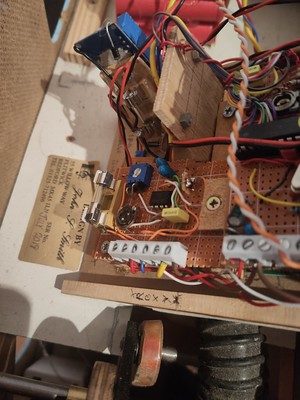
The power wires in the original electronics are on the left screw terminal.
Then there are the MIDI wires.
This picture of the original electronics shows the MIDI white and orange wires. Neither is ground. One is 5v and the other is the data.
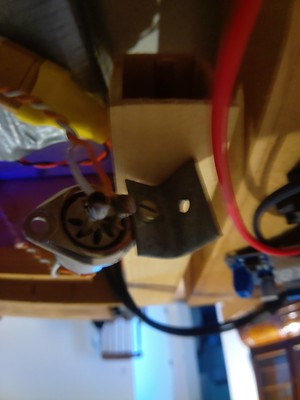
Fortunately, looking at the existing MIDI jack revealed which wire was which.
Instead of using a cable, the previous owner has driven nails into the jack.
Simply compare the nail position with the MIDI spec.
The MIDI pins are not in the order I would have guessed.
Fortunately, this followed the spec, as the data changed too fast to be discovered via voltmeter.
The voltmeter did let me know that the PD trigger I bought has on and off labelled in reverse on the device.
The board has limited documentation.The one with the glowing red numbers is reporting the output voltage.
The black thing on the breadboard is the new input MIDI jack.
And it worked.
So I brought it to the algorave and live coded it with SuperCollider.
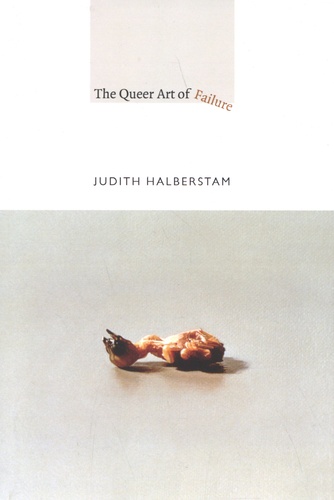
The Queer Art of Failure by Halberstam is a key text for queer clowning and also is an excellent example of 20 year old queer theory with all its strengths and weaknesses.
The book suggests a political programme as much as a meant to analysis. ‘“Legibility,” writes Scott, “is a condition of manipulation” (1999: 183).’ (p 10) so we cope with that by becoming illegible. ‘Resist mastery. Here we might insist upon a critique of the “all-encompassing and global theories” identified by Foucault. In my book this resistance takes the form of investing in counterintuitive modes of knowing such as failure and stupidity; we might read failure, for example, as a refusal of mastery, a critique of the intuitive connections within capitalism between success and profit, and as a counterhegemonic discourse of losing. Stupidity could refer not simply to a lack of knowledge but to the limits of certain forms of knowing and certain ways of inhabiting structures of knowing.” (p 10-11)
But could this be both dated and kind of passive? ‘I do believe that if you watch Dude, Where’s My Car? slowly and repeatedly and while perfectly sober, the mysteries of the universe may be revealed to you. I also believe that Finding Nemo contains a secret plan for world revolution and that Chicken Run charts an outline of feminist utopia for those who can see beyond the feathers and eggs.’ (p 21)
No, but really, there’s a lot here to unpack.
‘Chicken Run is different from Toy Story in that the Oedipal falls away as a point of reference in favor of a Gramscian structure of counterhegemony engineered by organic (chicken) intellectuals. In this film an anarchist’s utopia is actually realized as a stateless place without a farmer, an unfenced territory with no owners, a diverse (sort of, they are mostly female) collective motivated by survival, pleasure, and the control of one’s own labor. The chickens dream up and inhabit this utopian field, which we glimpse briefly at the film’s conclusion, and they find their way there by eschewing a “natural” solution to their imprisonment (flying out of the coop using their wings) and engineering an ideological one (they must all pull together to power the plane they build). Chicken Run also rejects the individualistic solution offered by Rocky the Rooster (voiced by Mel Gibson) in favor of group logics. As for the queer element, well, they are chickens, and so, at least in Chicken Run, utopia is a green field full of female birds with just the occasional rooster strutting around. The revolution in this instance is feminist and animated.’ (p 32)
Of course, Halberstam was writing in the Bush years, when they said, ‘And yet if we must live with the logic of white male stupidity, and it seems we must, then understanding its form, its seductions, and its power are mandatory. Dude offers a surprisingly complete allegorical map of what Raymond Williams calls “lived hegemony.” ‘ (p 60)
The Bush years were indeed defined by an intentional ignorance, and a feigned benign folkiness, which sought to mask the violence. The ableist framing of stupidity, in retrospect, feels like the wrong analysis for then and especially now. Instead, one thinks not only of a good ol boy, but also Sartre writing about verbal play, by antisemites. Knowledge, ignorance and understanding is a game to them. This intentional ignorance is a privilege because truth doesn’t matter and reality need not touch them. Their unknowing is an assertion of power. They don’t need to know.
In his book On Bullshit, Frankfurt differentiates between lying and bullshitting by noting that liars are being deliberately unthruthful in particular points that they have to keep track of. Liars care about truth. Bullshitters, on the other hand, have no regard for truth or falsehood whatsoever and will fake whatever context is required.
Trumpism is grounded in bullshit. The knowledge gap shows that one is either pledging allegiance to the bullshit of others, or creating bullshit oneself. Lack of knowledge is power and facts are treason.
Halberstam goes on to talk about generational transmission. “De-linking the process of generation from the force of historical process is a queer kind of project…. We may want to forget family and forget lineage and forget tradition in order to start from a new place, not the place where the old engenders the new, where the old makes a place for the new , bit where the new begins afresh, unfettered by memory, tradition, and usable pasts.” (p 70)
The problem of lgbt people is sometimes articulated as too little history and a lack of intergenerational transmission. Whereas the problem of Judaism is too much history propagated as intergenerational trauma. So where does that leave the queer Jew? Groups like Queer Yeshiva, where I first heard this contradiction stated, seek to claim the history and by action, cause the old to make space for the new. Every generation reinvents Judaism.
Halberstam, also Jewish, accepts the queer blank state as given and seeks to use it as a model to divest themselves of all the burden of history.
But we have the same amount of history as anyone else. Catholic schools also transmit history, including a history (but not a present) of prosecution. And queers do have elders, histories and stories which are subject to an intentional erasure. We do not forget Oscar Wilde, but section 28 sought to impose amnesia. I think we can take it as given that Halberstam does not wish to copy that.
It’s also worth noting that Halberstam’s analysis predates the gayby boom. Childless queers were the norm when this was written, whereas now, it’s far more common for queers to visibly have kids, with their queer partners in their queer relationships. Indeed, it’s also much less common that a parent would lose custody for queerness, which was absolutely the case in the US before Lawrence v Texas. Blue laws in California weren’t enforced, but they were on the books. Every queer in a custody dispute was guilty of regular felonies.
“Edelman uses this sense of the queer in order to propose a relentless form of negativity in place of the forward-looking, reproductive and heteronormative politics of hope that animates all too many political projects. … The queer subject, he argues, has been bound epistemologically to negativity, to nonsense, to antiproduction, and to unintelligibility, and instead of fighting this characterisation by dragging queerness into recognition, he proposes that we embrace the negativity that we anyway structurally represent.” (106)
But if “the heteronormative political imagination propels itself forward in time and space through the indisputably positive image of the child,” (ibid) what about now, 20 years later, when that child asserts gender-nonconformity and non-heterosexual yearnings? Of course, the heteronormative imagination also, “projects itself back on the past through the dignified image of the parent, the queer subject stands between heterosexual optimism and its realisation.” (ibid) Which is necessarily complicated when the child, themselves, asserts the agency that scuppers heteronormative continuity. If no adult queer stands there, creating the barrier, then one must be invented to be excluded. If the kids are catching ROGD off of twitter, then social media must be banned.
But what does it mean for queerness as failure when my queer friends are having or adopting children and when those kids themselves come out? IS an eight year old who is certain of their nonbinary status really groping about in the dark like a lesbian at a 1930s Paris nightclub? Or have they found a new queerness on the daylight playgrounds they inhabit?
Can this, itself, be a form of hope in the midst of such intense repression and looming fascism? Are fighting for these nonbinary kids to have unimaginable queer futures in a somewhat less climate-fucked world? If so, how does the engagement of imagination within the play-failure of the clown enable this world building? Is it our adult world with it’s self-important reproductive drive that must be shown to have failed? Or is this failure so self-evident, so catastrophic, that the time to dwell on it is long past. Leave the navel gazing to the gerentocracy as it dies.
The forward looking hope of the previous generation of Nazis, confidentially singing “the future belongs to me” in ‘Cabaret’ is, itself, a historical projection. The Nazis of a century ago killed others. The current branch yearn also for their own demise, as they burn petrol like there’s no tomorrow, like they wish there to be no tomorrow.
Halberstam rejects optimism as a programme. “to simply repudiate the [social and systemic, rather than essential] connections between queerness and negativity is to commit to an unbearably positivist and progressive understanding of the queer, one that results in the perky depictions of lesbians in ‘The L Word’ or the reduction of gay men in film and on TV to impossibly good-looking arbiters of taste.” (p 98)
However, I would argue that what disrupts the reproductive child is not a shadowy queer blocking a hetero transmission, but rather a teacher shining a light on history, context and the skills of self articulation. This sounds optimistic, but it is not.
When this liberatory programme detours into optimism, we get the baggage and responsibilities dumped on to Gen X youth. We were informed, from basically the age of 10, that we would fix climate change, fix racism, fix all the world’s woes, thus relieving our elders from the burden of acting. Witney Huston sang this as an anthem:
“I believe the children are our future / Teach them well and let them lead the way”
This heroic / optimistic abdication of responsibility could be accomplished by building up our self-esteem with empty puffery:
“Learning to love yourself / It is the greatest love of all”
An actual program of world improvement should empower youth to escape heterocapitalist structures, but they certainly can’t be left to do this alone. It’s not enough to fail to transmit normative power structures, but necessary to collaborate on their overthrow.
Is a revolution a queer failure? Is being ungovernable a failure? Or is a queer failure an act of sabotage of the machine that tries to crush us? Under the rubric of neoliberalism, solidarity is failure.
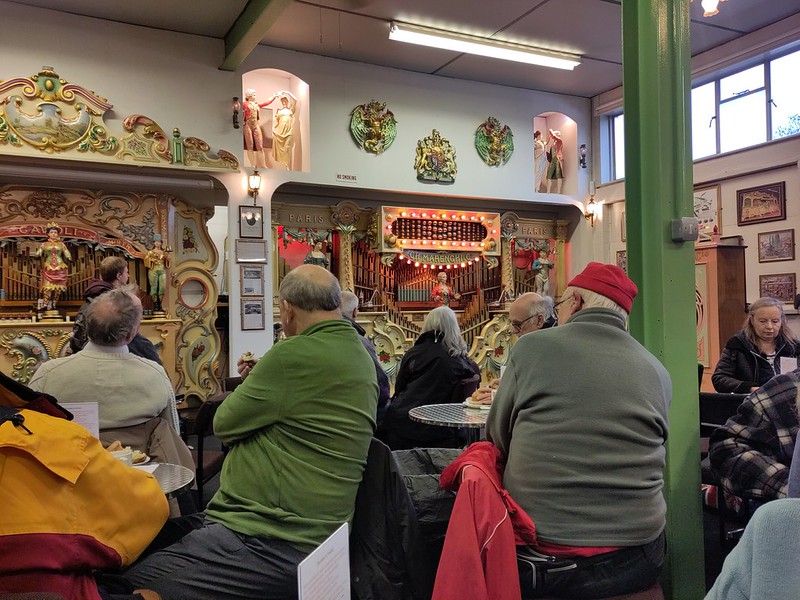
As winter is the off-season for organ grinding, the only event in January’s BOGA calendar was the open day at the Amersham Fair Organ Museum. This monthly event is free. The museum is set up like a giant cafe, filled with round tables and with a kiosk near the door selling sandwiches, tea and cake. Visitors buy their snack and settle at a round table in a large room surrounded by the loudest fair organs you have ever heard in your life.
Visitors listening to a CH Merenghi & Co organ
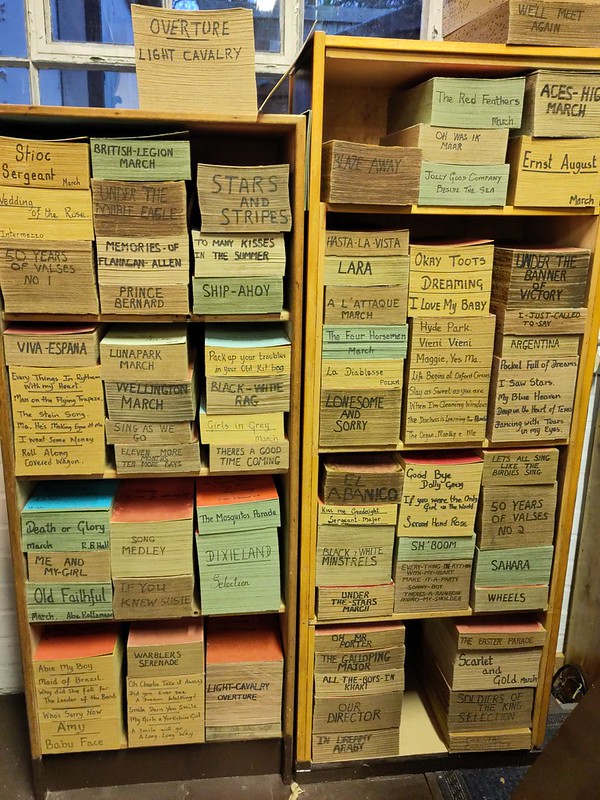
The musical selection was highly varies Britania Rules to Waves, Onward Christian Soldiers, Rah Rah Rasputin, a Beatles song and many things I did not recognise. The major unifying factor is that everything seemed to be more than 30 years old.
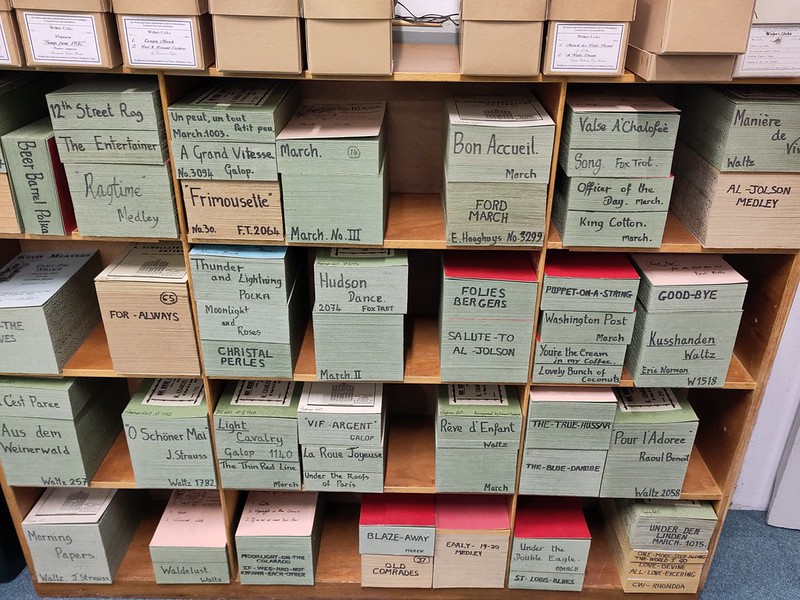
Some of the repertoire of the AFOM
The music was mostly played off of “books”. This is a format very similar to a piano roll, but in an organ-specific format for hole punching. Rather than being played from a spool, the holes are punched into tougher card, which is folded in a butterfly / Z form, so one card proceeds to the next. The start in a neat pile and finish in a neat pile. Using this format rather than scrolls allows for the use of thicker material and also allows arrangements to be arbitrarily long. This layout method was invented by Gavioli.
They were the makers of many of the organs at the Amersham Fair Organ Museum, was a Franco Italian venture that worked in both countries. It was Anselme Gavioli, heir to the family business, who invented and patented the book format.
I had the impression that Gavioli was really the major organ manufacturer of their heyday, but according to Wikpedia, they mostly survive in the UK.
Gavioli shut down in 1912, so many of of the books on the second shelf post-date the company that invented them.
By that time, they had moved to France and organ grinding in general had lost its association with Italians, which perhaps explains why there are so many German songs.
In the late Victorian period, as organ busking was a major form of employment for Italian migrants, London streets were also full of German brass bands. The large format organs have the presence of a full band and, indeed, many full band pieces are in their repertoire. For example, on the shelf you’ll see The Washington Post March, by Sousa – an American. The old German pieces may have made their way to big organs. As for polkas, they were already part of street organ repertoire.
One of the larger books on the shelf is an Al Jolson medley. was the star of The Jazz Singer and was the biggest star of the 1910s and 20s. He is best remembered now for performing in blackface. However, he was extremely popular at the time and his ‘style was “arguably the single most important factor in defining the modern musical.” ‘ (Wikipedia) Jolson was a migrant to the US from what is now in Lithuania in 1894 – part of a massive wave of Jewish immigration of people fleeing violence. [Obligatory Spivak reference goes here.] Anyway, there’s some minstrelsy archived in Amersham.
As to the organs themselves, the larger organs seem to be intended to mimic large brass or marching bands, in terms of amplitude, repertoire and available timbres. I only saw one relatively small organ, which was still bigger than mine. Like the MIDI repertoire that came with mine, the arrangements seemed to be based on wind ensemble, crossed with player piano.
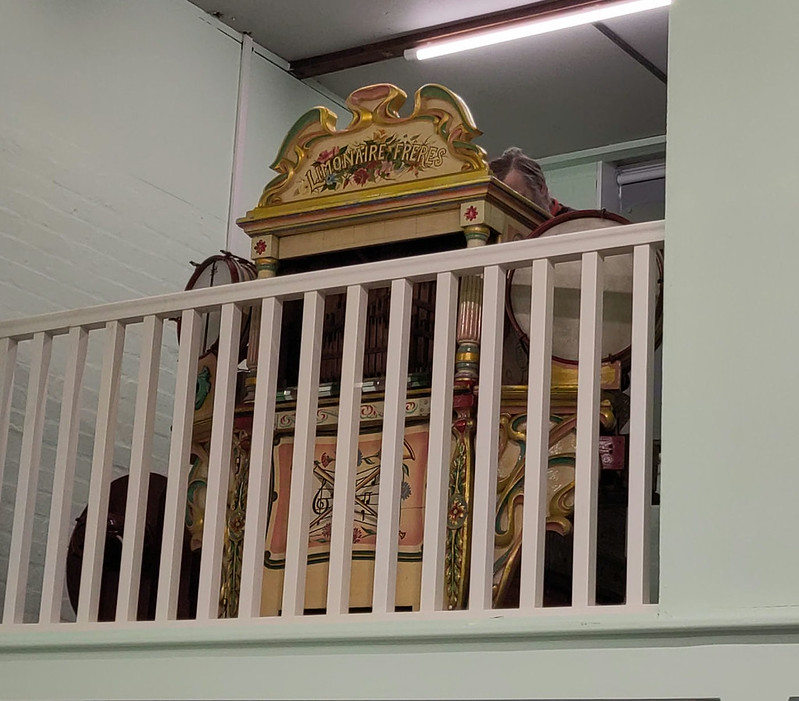
Limonaire Frères organ
Clowns
Tthe 80th Annual Grimaldi Service took place on Sunday 1 February 2026, at All Saints Church in Haggerston. This is not the clown’s church. The Grimaldi service is too popular to fit in that smaller venue.
This turned out to really just be a mass but with some clowns in it. It had all the normal elements of a mass, but with some honking during the breaks. Before the service, the organist played some slow moving music with midrange drones. It was not at all like fair organ music. The opening hymn was Tis a Gift to be Simple but with the Shaker lyrics, Lord of the Dance, which are unfortunately seared into my brain from Catholic school.
One of the main readings was from Ecclesiastes, the list of binary oppositions. This was also a major theme of the homily and I guess the idea of clowns in church. I suspect there was intention to have this holding of opposites be an element in a joyful memorial mass. However, this is fairly normal in US culture where people have “celebrations of life” rather than “sad” funerals, because grief is a failure under neoliberalism. It’s too hard to constrain. It doesn’t make people into better workers but instead feeds an implicit, emotional demand for justice. Grief must be denied.
Christianity, which co-developed with neoliberalism and is the major spiritual underpinning of the ideas within it, is all too willing to accommodate this. Your friends will be back as soon as Jesus finishes his brief holiday.
Instead, clowning itself provides the rupture, making space for grief and complicated joy. Clowning is queer. Clowning disrupts or at least complicates power structures. Clowning has much more spiritual potential than anything the CoE has to offer.
A page from the service order
Anyway, I felt alienated by the Christianity, as I should have known I would. The bake sale had nothing vegan. But at least there was a clown show afterwards.
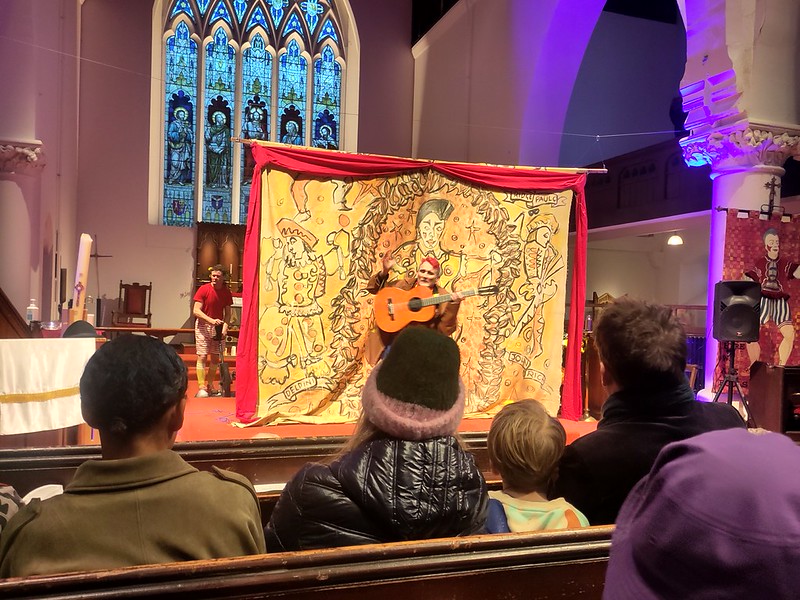
A clown who fails to play guitar, in. The religious banner on the right says “Here we are fools” and has an image of Grimaldi
Queer Theory
Has been moved to it’s own post, but I don’t want to untangle the bibliography, so all of it is here.
Previously, I suggested that US residents and citizens, including non-voters and people residing outside the US write to their representative and senators. For those who, like me, do not live in the US, you have an additional government you can write to.
This is what I have asked for, some of which is specific to the UK:
expressions of solidarity with anti ICE protestors
an end to the special relationship
joining European partners in developing alternatives to US tech platforms
the introduction of tariffs
sanctions against Trump administration officials implicated in harming migrants
Anyone in any country can write asking for these or similar. If you have a connection to the US, such as citizenship, you may want to mention that, but it’s not necessary. Maybe you’re just horrified. Maybe you just don’t want to do military service in Greenland. Frankly, there are a lot of reasons the US is a dangerous ally to have.
Asking for sanctions against my own country is a big bright line, but so is murdering people in broad daylight. So is detaining hundreds of five year old refugees. It’s good that one kid got released, but that prison is full of traumatised children, being fed spoiled food and not allowed to study.
(Also, I see you Europeans getting smug, but Calais is also full of children held in cages without access to schooling, so fuck off and protest that too, eh.)
I wrote to my own MP and a cross-party Lord. You to can write to a lord. Starting an email with Dear Lord feels grimly apt to this moment. But which lord? I picked one with experience living in the US, but you can also pick them via policy area or even based on their birthday. Britain is nothing if not arbitrary.
In the last post, I also suggested you dump Microsoft. Take the money (and time, tbh) you save and consider donating that to a US NGO like HIAS which offers legal and practical support for migrants. Or donate to support migrants where you live. For example, Rainbow Migration or Care for Calais.
BDS USA
Even if our countries think it’s too risky to piss off the tech platform monopoly, we can do a consumer boycott and try to move our workplaces.
The major Trumpy tech platforms are Google, Amazon, Facebook (Meta), Apple and Microsoft (aka GAFAM). It took years for these to creep into our lives and getting away from them won’t happen in an instant. You shouldn’t bin your working laptop or phone, but you probably want to make some changes to the software.
Last time, at the bottom of the post, I mentioned some email providers who are not the above and mentioned that I didn’t delete my gmail account, I just set up a redirect and just started using my new email address for most communication. It’s a slow process, but it works.
Obviously, these Trumpy companies do have overwhelming market share, so my suggestion is just to try something else first. The only ways I could find to get refillable whiteboard markers was to order them off Amazon or travel to Germany, so I ordered from Amazon. But when I wanted a power bank, I found one on Argos.
Alas, we live in capitalism. Argos isn’t perfect, but they’re not GAFAM.
Please vote no on any budget that includes money for ICE.
This is a top issue for me. While I’m happy with your performance as my representative, I would support a primary challenger if you vote to fund ICE.
ICE must not get another cent. The agency must be disbanded and agents who violated the law must be held to account. There can be no compromise with their lawless violence. Voting against their further funding is a chance to take a stand for the people they have killed, injured and ripped from their homes, families and communities.
Thank you for your time and your service.
Best, Your Name
You can find your representative with your zip code. You should use the zip code where you are registered to vote. If you are not registered and live in the US, use the zip code where you live. You don’t need to be a voter to contact your representative. Even if you don’t have the right to vote, you still have the right to voice an opinion.
If you live outside the US and are a US citizen, you would use the zip code of the last place in the US in which you lived. You have the right to vote! You can find out how to register via https://www.votefromabroad.org/. If there is some reason that you can’t vote (some states disallow people who have had felony convictions or who have been dishonourably discharged from the military), you can still write a letter.
If you have never lived in the US, but are a citizen, you also have the right to register and to register. To figure out your voting address and zip code etc, go to https://www.votefromabroad.org/.
Contact your senator
While we’re at it, have you written to your senators? Every state has two, so you can send your letter twice.
Dear Honorable Senator,
I am writing to strongly urge you vote against ICE funding. This is a top issue for me.
The US is at a crossroads. ICE in its current form is incompatible with the continuation of democracy. Your vote to cut off their funding is vital to the future of our country and the future of your party. Democrats must live up to their name and protect democracy and put a stop to the terrible, escalating violence ICE is causing on city streets.
Again this is a top issue and – while I’m happy with your performance as my senator – I will support primary challengers against anyone who does not stand up for that is right and necessary at this dangerous moment. I hope we can count on you.
Writing letters is fairly easy and doesn’t take much time. Other ways you can get the attention of your elected representatives is by getting a letter to the editor in a newspaper. Even a very niche, community newspaper will do. Get a copy and send it to the representative’s office.
And, of course, many people in the US are doing amazing street actions.
BDS USA
Outside the US, we can not only write letters to our representatives in the US, but to MPs or elected officials where we live. The US is a bad ally under Trump. We need greater economic distance from the US and to rely less on US technology. Isolating the US economically will help dislodge Trumpism.
Microsoft is a major Trump ally. They also make a lot of software and services. Getting rid of all of them all at once is daunting, so we can do a few at a time.
For instance, you could stop using Microsoft Office and instead use Libre Office, which has a spreadsheet, a presentation program, a text editor and a few other office bits. I have used this for several years. I wrote my PhD thesis in the text editor. I tracked details of the Network Music Festival in the spreadsheet. I used the presentation software for all of my teaching. (Some VLEs like Moodle integrate really well with Libre Office Impress).
You don’t need to do everything all at once. Pick which apps you want to switch first and use Libre Office to make new documents. It will open MS documents and vice versa. You can take this one document at a time.
Did you know that LinkedIn is owned by Microsoft? It also, until recently, had the worst track record for sexual harassment of any of the social network. (It’s no longer worst because X has raced to the bottom.) It’s an unmoderated mess. Nobody likes it. Now you have a righteous reason to delete the account you never liked anyway.
Outlook is also Microsoft (and also very annoying). There are a lot of different ways to get email. Your ISP may offer it. I get mine through my web hosting. There are some associations that offer it, like for artists or anarchists. When I asked for recommendations, some of what people said included: Fast mail is outside the US. Mailbox.org is outside the US and also offers replacements for a lot of MS services. Tuta is outside the US and also offers replacements for other MS services. Cock.li gets you email and a fun domain name for fans of roosters. Posteo is nice.
When I moved away from gmail, I first got a new email address and made sure it was working for me. I could access it reliably from all my devices and it reliably received and sent email. After that point, I sent up a redirect to automatically forward my email to the new address. I’ve gradually been updating accounts and telling people to use my new address. I have not closed the old one, I just quit using it.
This is a process, but it’s an important one. As you get the hang of using non-Trumpist software, tell your friends and colleagues. Try to get your work to switch. Is it a good idea to rely on cloud storage from a company that wants to help invade Greenland? That has turned off people’s accounts at the behest of the Tump administration? It’s time to move.
Le Roi et l’Osieau is a French film which also features an organ grinder and a Hitler allegory – this time not in the same person. The film was in production from 1948 and had a partial release in 1952, but was not completed until it’s release in 1980(!). There also exists a ‘low-budget English-language release of the 1952 version, titled The Curious Adventures of Mr. Wonderbird, [which] is in the public domain and available free’ on archive.org. (Wikipedia)
I was only able to find the 1980 version in French, without subtitles. I was able to follow it because I had watched My Wonderbird first. The films contain large, sprawling stories, with a lot of plot, and a clockwork punk aesthetic. They have all the surrealism of Soviet children’s cinema, but (especially Wonderbird) also uses Disney-esque archetypes. With a king and a shepherdess, it has elements of a bucolic fairytale, but with a chimney sweep and organ grinder, this is intermixed with urban elements.
The king lives in a hyper modern police state, called Takicardie, surrounded by machinery – literal mechanisms of power – and guards. Although he is a fairytale character, his statement that “work is freedom” could not be a clearer allusion to Nazis and Auschwitz.
The heroes of the film are a chimney sweep and shepherdess who wish to marry, despite the king’s insistence the shepherdess should marry him. The narrator, a mocking bird, also plays a major role in the action.
The organ grinder is a supporting character, introduced late in the narrative. He is subaltern, literally living in the underground. The proletariat is so alienated from their labour and the results thereof, that they know of the sun and birds only as fairytales.
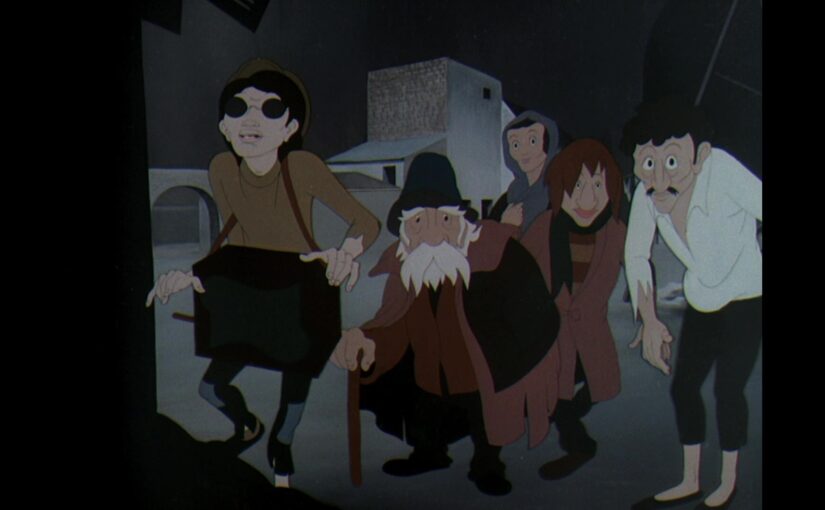
The organ grinder
As far as the sound design goes, the two films have some difference. Wonderbird uses music that could conceivably come from a busking organ for the organ scenes, whereas the later version treats the instrument more as a Victrola. For the scenes with the giant robot, in Wonderbird, the sound effects of the giant robot emphasise the sound of the machinery itself. Giant, grinding sounds and gears, as well as destruction, like breaking cement. In the 1980 version, the robot itself is quieter and the sounds of things breaking is foreground. Those are the sounds of wooden boards being dropped.
The earlier version (or perhaps anglophones?) envision the proletariat in modern blocks. Whereas the French in 1980 had them in historic wood-framed housing.
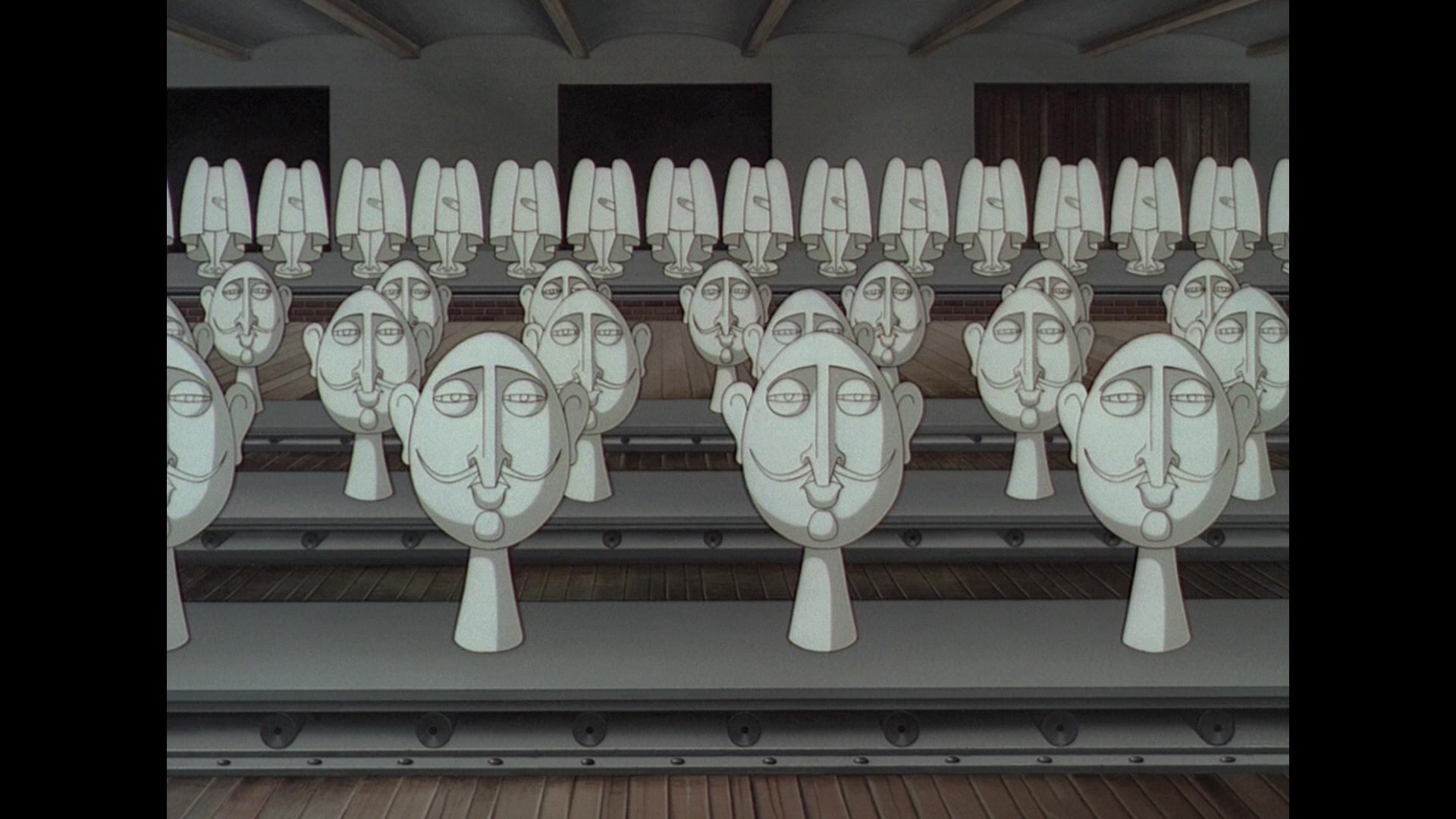
The later version also gives more clues as to the primary industry in the society, although this is present in both versions. The workers toil to produce representations of the king. All commerce is created directly in his image. Or is in service of his entertainment and power.
An assembly line of royal statues
There is therefore a strong resonance with generative AI. The ruling class creates its own image, without real meaning, over and over again.
In both versions, the organ grinder plays absolutely necessary political roles both in keeping the proletariat hopeful and ready to participate in the revolution, and also in winning over the king’s lions to rise against him. He is especially vital in playing for the lions, who would have eaten the main protagonists if not for his intervention.
The organ grinder in a dead tree in the lion enclosure
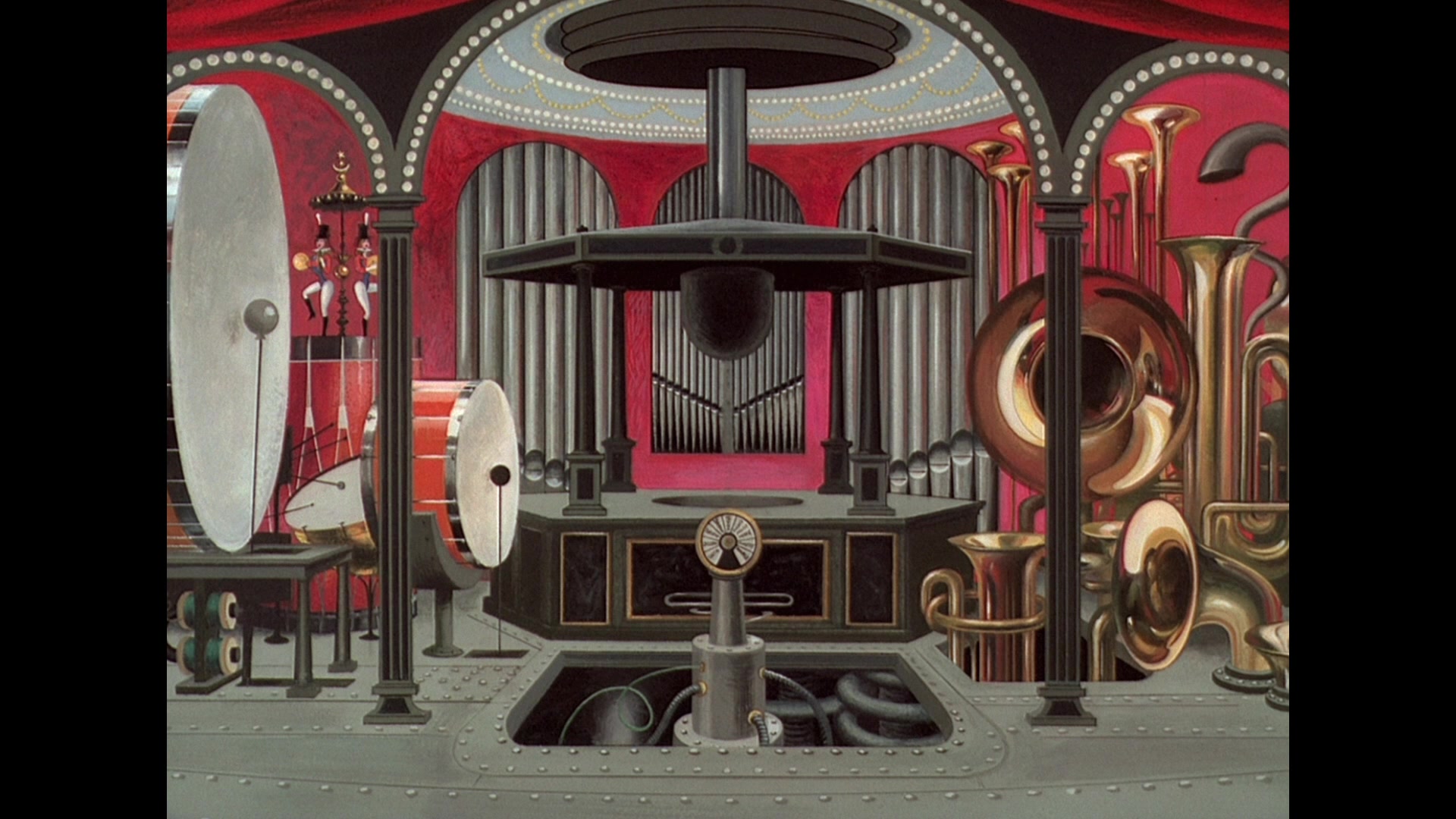
The 1980s version, in addition to removing the sonic references to a busking organ also portrays mechanical organs generally as a neutral technology. The king’s giant robot has quite a lot of space set aside for a fairground organ within it. This organ does play music that could realistically emit from it. It has a large number of tuba-like pipes. These low brass sounds are used to ominous effect and indicate menace.
The king’s enormous organ
The epilogues of the two films also differ. Wonderbird ends with the survivors of the regime collapse living in an idyllic camp near the ruins of the urban centre. The 1980 version, has a more satisfying emotional tenor in which the robot has become both disables and autonomous and acts to smash one of the king’s remaining cages. Although this is the right emotional tone, the political messaging is more muddled. The master’s tools do take down the master’s house.
Comparing Brundibar and Le Roi
In the wedding scene of Le Roi, all of the guests are male guards – oddly modelled on Victorian Englishmen. The society is clearly very class stratified, but this is mostly expressed in terms of military command. In that scene, there is also a propaganda agent, taking a pseudo-journalistic role, while also instructing the crowd when to cheer. He seems to be a parody of Soviet reporting. The king’s art museum also has a docent/security guard who ranks below the king’s guard and is abused by them. The guards themselves who are of equal rank appear to behave equally. The proletariat are also apparently equal among themselves.
It’s perhaps not overly useful to compare this fairytale society with actual Nazis, but to do so anyway: The SS’s structure promoted camaraderie and downplayed command structures, so being within it felt relatively flat. However, there was a very clear hierarchy between members and non-members.
By contrast, Brundibar both is and is not a fairytale. It has talking animals, but the organ grinder is grounded in material conditions. As an allegory, his actions both lie within fairytale logic and how children might perceive adult actions regarding rules they do not understand. Unlike Le Roi, only the subaltern is present. The opera has only civilian characters and depicts an extremely unequal society, in which I argued previously, the organ grinder is a middle class between less privileged buskers and patrons. In his paper, The Social Basis of Fascism Sinclair suggests that a more accurate term would be ‘middle strata’, which is ‘preferable because it conveys the idea that included share an intermediate position in the status structure of a society, although they may belong to different classes.’ (p 101) While it would normally defy credibility to imagine any busker as in an intermediate class, we can perhaps justify it here from the fairytale view of children who are definitively below Brundibar, the organ grinder, in the social and class hierarchy.
But what did fascism mean for the middle strata? In 1936, Barnes wrote about the relationship between fascism and the middle classes. He writes, fascist ‘popular electoral campaigning has been directed chiefly to the middle class. It has been most successful in those countries where a disaffected petit bourgeois class is allied in politics with a land-hungry peasantry. Especially in its initial struggle for power and to some extent as a continuing policy, Fascism has looked to these groups for its popular support.’ (p 25) But these groups are not naturally united. Their ‘attempt “to formulate a coherent, workable system is handicapped at the outset by the fact that as a class it possesses the homogeneity neither of the trust bourgeoisie nor of the proletariat. It is a mixture of heterogeneous elements, some in undisguised conflict.” ‘ (p 27) Thus suggesting that fascism’s middle strata are a coalition of groups seeking greater power. The inherent instability turned out to not be a material problem for fascist countries, who in reality organised for the benefit of corporate monopolies. ‘Power once achieved, the forgotten man [of the middle strata] was once again forgotten.’ (p 28) The fascists thus used a disparate and divided group of people who felt some privileges to gain power while actually ignoring their concerns.
In Brundibar, the eponymous organ grinder steals the children’s takings, which he believes are rightfully his. In terms of Eco’s ideas of Ur Fascism, he feels frustration, so he takes action. This speaks to the every day, individual experience of fascism, which is often expressed as conflict between individuals who are empowered or disempowered under the unjust systems. It is not Donald Trump out shooting bystanders, but swarms of ICE agents who are terrorising communities.
If Brundibar is a warning against social hierarchy, and a reminder that in a fascist state, we are surrounded by little dictators, what can Le Roi teach us? Cooksey writes, ‘Begun in the wake of European fascism and the occupation of France, Le roi references totalitarian spatial design and the iconic images of the dictator. By underlining their construction, the film satirizes and subverts the authority claimed by the spectacle of fascist grandeur.’ (p 210) As to the mechanics of this, Cooksey writes, ‘Takicardie’s chief industry is devoted to the mass-reproduction of the King’s image, reduplicated throughout the city in paintings, sculpture, and even topiary. In a symbolically relevant turn, one of the images of the King escapes from a recent portrait, replacing the actual King. In this political allegory, the image of the face becomes the literal controlling master sign, defining everything in the kingdom.’ (p 214) Politically, our heroes are inherently opposed to this, ‘The identity of shepherdess links her with the pastoral, while that of the chimney sweep with the urban. We might recall William Blake’s Songs of Innocence and Experience. Together their love points to an alliance of town and country, broom and crook instead of hammer and sickle.’ (ibid)
As the film progresses and characters are thrown to beasts, ‘The [blind organ grinder], who knows only perpetual darkness, is so inspired [by Mr Bird] that he begins a sad but hopeful song. . .. Moved by this song and Mr. Bird’s oratory, the beasts spare the prisoners and then break out of the den, forcing their way out of the subterranean city and upward into the palace, where they disrupt the King’s forced wedding to the shepherdess, primal forces emerging from the lower depths (the id), to disrupt and shatter the superego.’ (p 216) Thus emphasising the role of the arts as a force for resistance. Indeed, Duggan writes, ‘The film valorizes artistic and political freedom.’ (p 75)
A lion enjoying organ music
However, as the king’s second, larger organ also suggests, Cookes notes the ‘underlying theme of fascist spectacle and the connection between the regime of signs and the despotic.’ (p 216) Art can be used for good or for evil. In the world of Takicardie, this is most often expressed via architecture, ‘Here the city and its public buildings are conceived as works of art that establish social strata and ceremonial spaces. With its monumental buildings, its formal manipulation of heights, creating hierarchies between the public and the domestic.’ (p 217) In Brundibar this is primarily expressed via social relationships, but the fairytale king of Takicardie has greater scope to create material conditions. The style of the king’s city ‘was the style favored by the totalitarian regimes of the 1930’s.’ (ibid)
As to the music, the timbres of the king’s organ reflect the sheer size of it and do reflect an assertion of power. However, the styles and content does not otherwise seem to link to the allegory. Indeed, the affordances of actual organs are not considered by 1980.
The film, especially the latter version, suggests no particular action but merely affirms that fascism is bad and freedom is good. The absence of a call to action in children’s media is certainly a reflection of the safety in which it was made.
Works Cited
Barnes, J. (1936). The Social Basis of Fascism. Pacific Affairs9:24.
Cooksey, T.L. (2019). Pataphysical Assemblages: Fascist Spectacle in Paul Grimault’s Le roi et l’oiseau. The Comparatist43:209–227.
The Curious Adventures of Mr. Wonderbir (1952). Clarge Distributors. 63 minutes.
Duggan, A.E. (2015). The fairy-tale film in France: Postwar reimaginings. In: Fairy-Tale Films Beyond Disney. Routledge, pp. 64–79.
Eco, U. (1995). Ur-fascism. The New York review of books22:12–15.
Hans Krása (1938). Brundibár. [Opera].
Le roi et l’oiseau (1980). 83 minutes.
Sinclair, P.R. (1976). Fascism and Crisis in Capitalist Society. New German Critique:87.
Toltz, J. (2004). Music: An Active Tool of Deception?: The Case of’Brundibar’in Terezin. Context: Journal of Music Research:43–50.
If the Italian stereotype was gone by the end of WW1, then what can we say about an opera written in WW2?
Toltz has the answers to my questions.
‘On 7 July 1943, Rudolf (Rudi) Freudenfeld . . . arrived in Terezín with his allotted fifty kilograms of luggage. Smuggled within was the piano score of Brundibár. In the camp, the score was re-orchestrated by the composer for the various instrumentalists who were available. Rehearsals were held in secret. The set, to Zelenka’s design, was constructed out of stolen wood; choreography was undertaken by Kamila Rosenbaum, a prominent modern dance exponent in Vienna prior to her transportation; and the premiere of the Terezín version took place on 23 September 1943, in the hall of the Magdeburg barracks. All in all, Brundibár was performed fifty-five times in Terezín up to the end of 1944, making it the most popular and most frequently performed work in the camp.’ (p 45)
Camp survivors, ‘Rind and Weissberger share an explicit agenda in exploring and commemorating Brundibár: exploring through personal collecting of recordings and information, commemorating it as speakers at performances, and advocating future performances of the work. They both hold the determined belief that the meaning of Brundibár, the simple message advocating an eventual triumph of good over evil, makes it all the more worthy for performance as a message of tolerance, one of the reasons they invest so much emotionally in the work. Both Rind and Weissberger also believe that performing Brundibár in a modern context commemorates the lives of the children who did not return from Auschwitz.’ (p 47)
And what of the use of an organ grinder as allegory? ‘Precise cultural understanding of the work is exceptionally important to Rind and, as well as pointing out the inadequacies of the current English translation, he also brings forth hidden meanings in the narrative. The character of Brundibár is an organ-grinder in the plot, and the cultural understanding of the role of organ-grinders in the post-World War I Republic of Czechoslovakia is crucial to Rind’s reading of the work. Organ-grinders were often wounded soldiers granted license to busk in their own particular area or canton and, when the children begin to busk on Brundibár’s turf, they transgress this adult rule, without being aware of it, and thus earn the ire of all the adults. Without this cultural understanding, the character of Brundibár could quite easily transform into a typical evil (outsider) caricature from fairytale or folklore. Rind’s contextualisation is therefore crucial in informing an accurate cultural reading of the story.’ (p 48)
Zooming out to an alternative reading, which I recognise is a fraught thing to do with a text with this history: The character of Brundibar, called a “dictator” in the English translation, is kind of a middle class figure. He was injured in service of the capitalist state and the military industrial complex, in such a way that made him “unfit” for further productive work. He has been granted a busking monopoly by the system, living in extreme precarity.
When children, more vulnerable than him, are also left without options other than busking, Brundibar fights to maintain the small amount of privilege he has been granted, acting the part of ‘dictator’ rather than siding with others exploited.
Brundibar therefore acts as a buffer between starving children and the adults with money who walk past them both. Therefore, the classes above the busking class are never actually threatened. All the action takes place in between the most vulnerable people in society. True revolution is never on the table, despite the revolutionary zeal of the youth.
The Shoah was a specific tragedy and one should avoid universalising, but a particular allegory in a particular play can possibly carry more baggage. Most productions on YouTube do seem to particularise it. Many have the children in it dressed in camp uniforms, to further tie it to the Shoah, even if this, itself is ahistorical. This particular camp was a showpiece for Nazi propaganda and, in documentary footage, the abductees did not wear uniforms. A well-produced Italian version transplants the set to Auschwitz.
I also found a British school production that seemingly made no reference to the play’s context and performed it as an opera with value in its own right as an artwork.
The moral of the play is defeating dictators and oppression through solidarity. This message is still timely and for this reason, I would argue that it’s valid to treat this as a living work, reinterpreted, restaged and sometimes recontextualised. The original context should never be erased or ignored, but part of “never again” does mean being vigilant now. Perhaps the in-between status of the Brundibar character reflects that the defeat of fascism is not just deposing one man, but an entire system and those who uphold it. That the “ordered liberty” some seek to impose makes everyone a dictator to those below them. All of these dictatorships must be overthrown.
Works Cited
Hans Krása (1938). Brundibár. [Opera].
Toltz, J. (2004). Music: An Active Tool of Deception?: The Case of’Brundibar’in Terezin. Context: Journal of Music Research:43–50.








![Organs, Clowns, and Queers [delete as appropriate]](https://www.celesteh.com/blog/wp-content/uploads/2026/03/55039107981_0760c9fdcc_k-825x510.jpg)
![Let Us now remember all who have served in this profession and have passed beyond this life.
All: Rest eternal grant unto them O Lord / May they rest in peace.
All: Rise in glory. Amen.
The clowns will say the Clowns prayer
Dear Lord, I thank you for calling me to share with others your most precious gift of laughter.
May I never forget that it is your gift, and my privilege. As your children are rebuked in their self-importance and cheered in their sadness, help me to remember that your foolishness is wiser than our wisdom. Amen.
Act of dedication, said by all
O Lord, our G-d, we acknowledge you as our Father, ourselves as your children, our neighbours as our brothers and sisters.
We dedicate ourselves to your obediance and to the service of others and to our hearts and our minds, our wills and our work in the power of the Holy Spirit and in the name of JC etc Amen
[Lord's prayer follows]](https://www.celesteh.com/blog/wp-content/uploads/2026/03/image-scaled.png)