The Baltics rail infrastructure mostly dates from the Soviet period and thus uses a different gauge of track than the rest of the EU. Which is why we took a coach to Poland.
Šaltibarščiai Šalti means cold Barščiai sounds like borscht
But its not just cold borscht, it is luridly bright pink because it is mixed with kefir (and also typically features a boiled egg floating in it). In Lithuania, it is typically served with warm spuds on the side, something deemed odd by Latvians. There is a rivalry between the two countries over who invented this culinary wonder and who does it best.
Vegan versions do exist. I will report on this after I return home. My spouse calls it a "salad soup".
On Vilnius, the city buses express solidarity for Ukraine. Across the Baltics, the flag of Ukraine is typically flown next to the national flag. If there ate only two flag holders, they will skip the EU in favour of Ukraine.
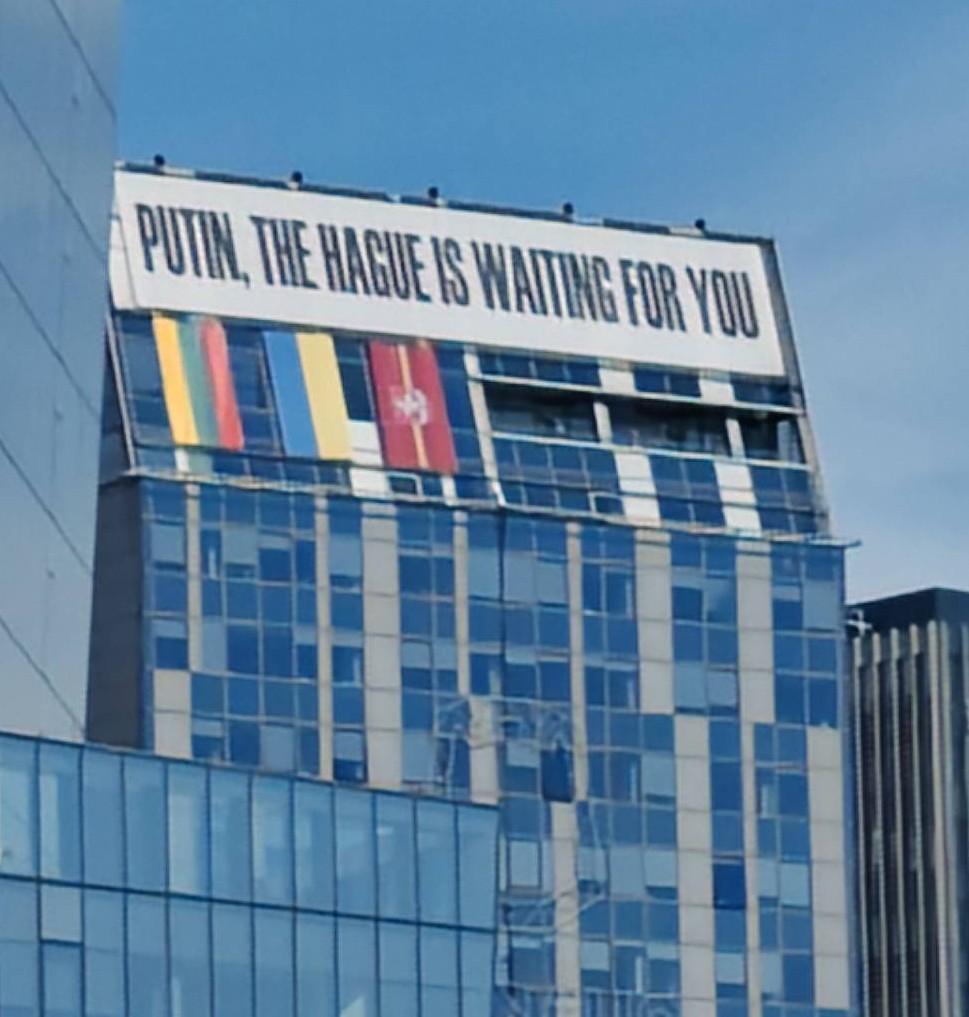
One of the city buildings in Vilnius has an enormous banner, in English, telling Putin that the Hague is waiting.
Ive seen market booths collecting charity for Ukraine and a woman with a bucket of change, in a church foyer doing the same.
The Lithuanian Foreign Ministry building has one public display, showing a map of Ukraine, including it's prewar territories. It lists the number of square kilometres those borders contain.
Ukraine may not win their war, but Russia does not have the resources to wage multiple conflicts. Ukraine is protecting the entire former eastern bloc.
The home town of Zamenhof is near a forest. I always imagined something more urban.
Did you know that Esperanto was invented by a Polish eye doctor? (Ĉu vi konas ke mi studis Esperanton?) Translations will be provided, especially as my current Esperanto skills are not very good and the original likely contains errors. (“Did you know that I studied Esperanto?”)
Białystok is Zamenhof’s birth place and also the tenth largest city in Poland. It is right next a major national forest sometimes called “the lungs of Poland”. We arrived there on a national holiday, looked at a grocery store, and then got on a train.
Staying in a neighbourhood in Warsaw that has vibes like Berlin did 20 years ago.
The hotel is extremely Berlin coded, with big plastic gummi bears in the stairwell.
Its nice being on a properly large city with access to plentiful, good vegan food. But also I'm definitely doing gentrification, as a passive touristic consumer and I don't like that.
But using slop animations of a painting of a yeshiva is not a choice they should have made. Really really not. More inexplicable than having both meat and milk in the canteen.
Zamenhof was Jewish and his universalism was treated by the Polin Museum as a specifically Jewish response to rapid change.
There were other movements around the same time dedicated to the notion of a universal second languages, especially Volapük, so it was an idea in the air at the time. However, Zamenhof was also responding to the mutual unintelligibility of Yiddish, Polish and Russian. The language has it’s name because Jews were not allowed to publish books, so he used “Dr Esperanto” (lit. ‘one who hopes’) as a pseudonym. He had linguistic skills from studying Jewish languages. And his publication was held when his father, in a panic, to try to keep him from breaking the law.
Of course, socialism and anarchism also were not specifically Jewish movements, but they did have significant Jewish participation.
…. But all of these museums continue past the golden ages….
In Poland, it's illegal to say that Poles collaborated with the Nazis on the Holocaust.
The Jewish History Museum notes that the Warsaw Ghetto clearance was carried out by the SS, the Gestapo and by soldiers from Latvia, Ukraine, and Lithuania, as well as the Jewish Police.
So the only Poles to collaborate on the extermination of Jews were Jews.
…Anyway, its exciting to be in the only country occupied by Nazis where no local fascists collaborated.
(I am not criticising this cultural institution for following the laws of its country.)
Edit: "A few Poles murdered Jews." says a thing further on….
I'm just going to skip the 20th century at these things. I feel like I have adequate knowledge of the Shoah.
And, like, they did cover the mass exodus of Jews in the 1960s, but it's hard to pay attention to anything after several rooms on the Shoah. I feel like they may have been a bit vague about why so many people left….
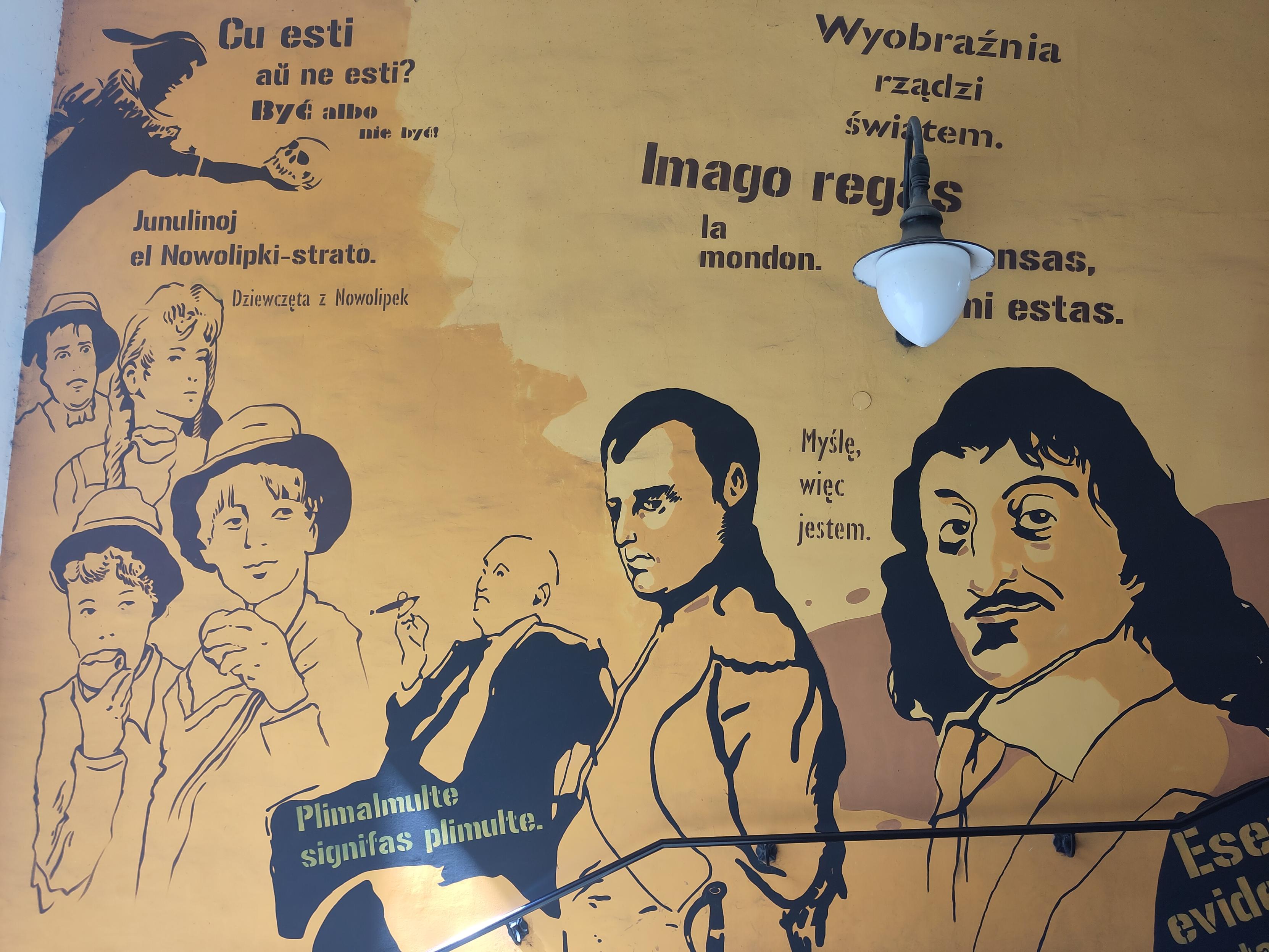
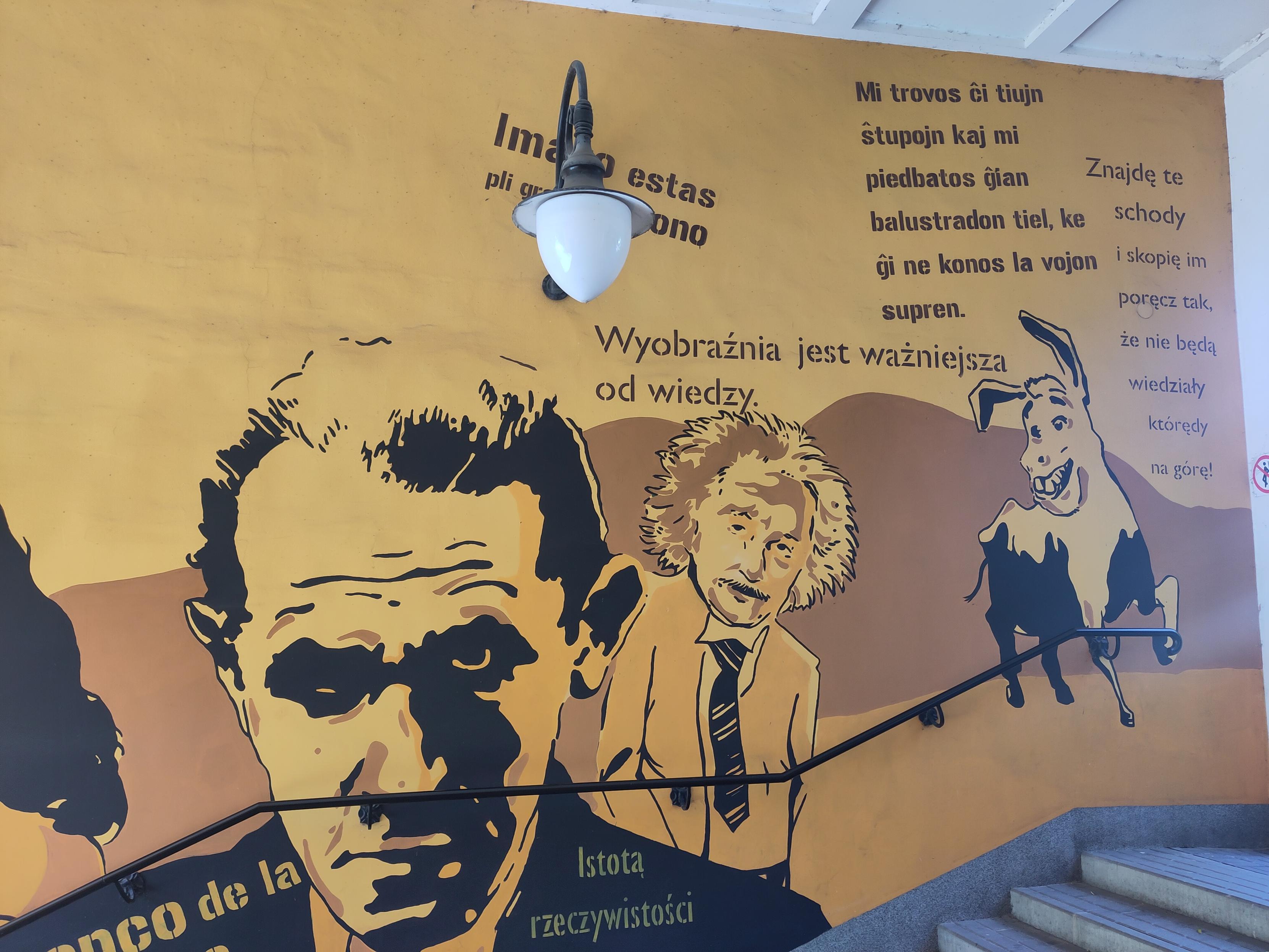
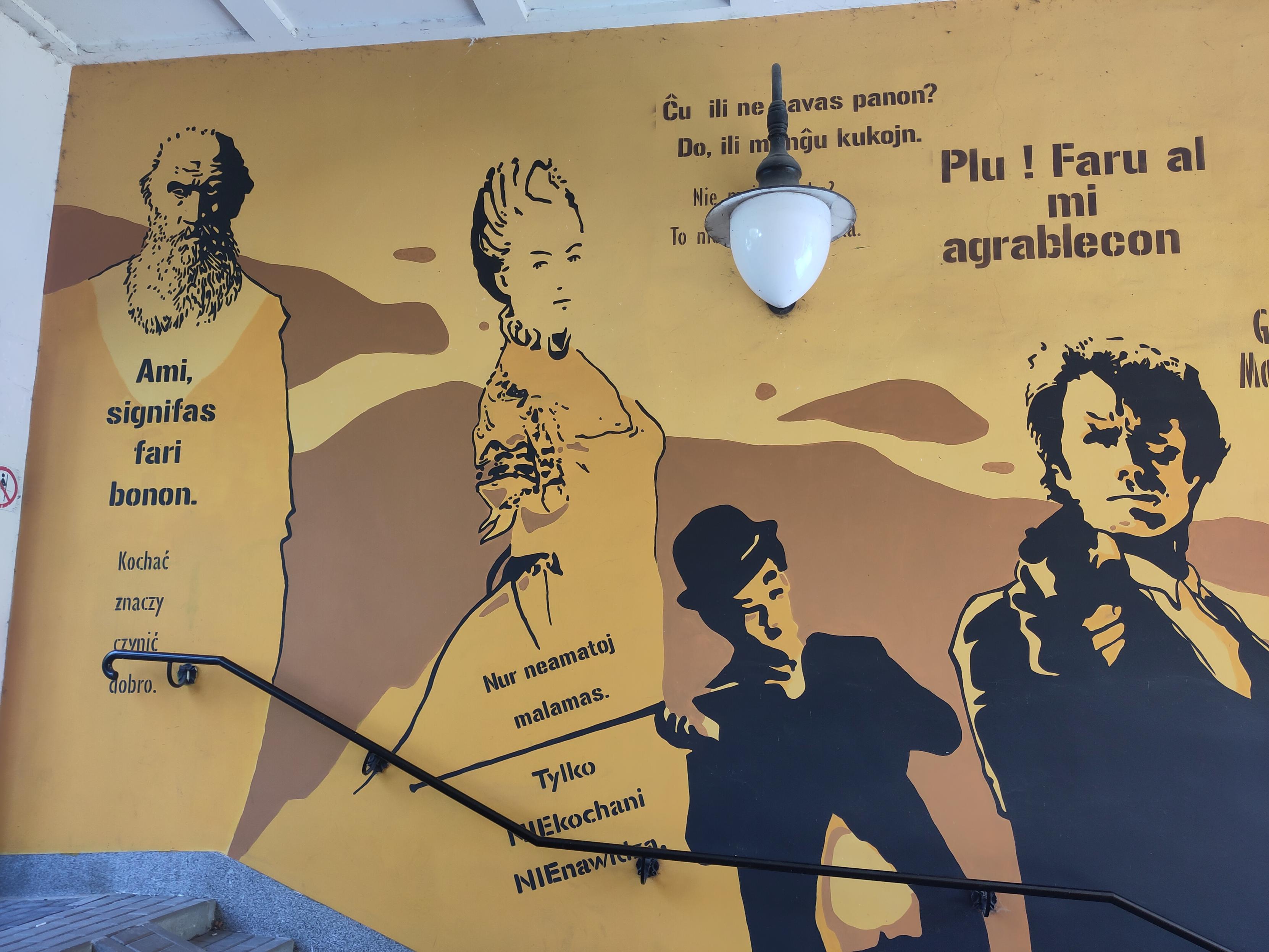
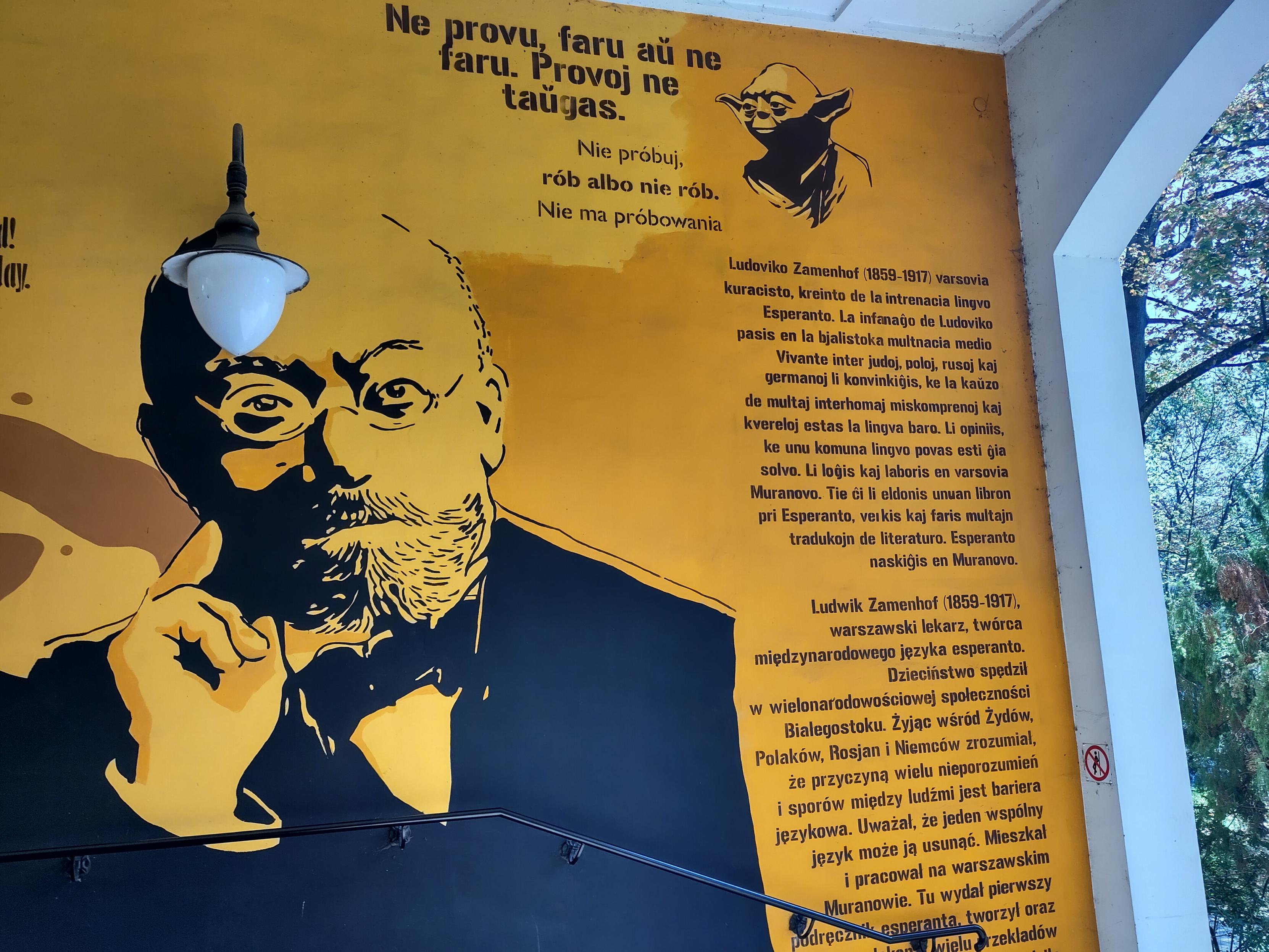
Esperanto in Warsaw, Polland. There is a mural near Zamenhof Street.
The Esperanto mural is an odd mix of famous quotes in Polish and Esperanto. The mix of figures is weird (the donkey from Shreck, Yoda, Clint Eastwood, etc) seem to mostly have no relationship to Esperanto at all.
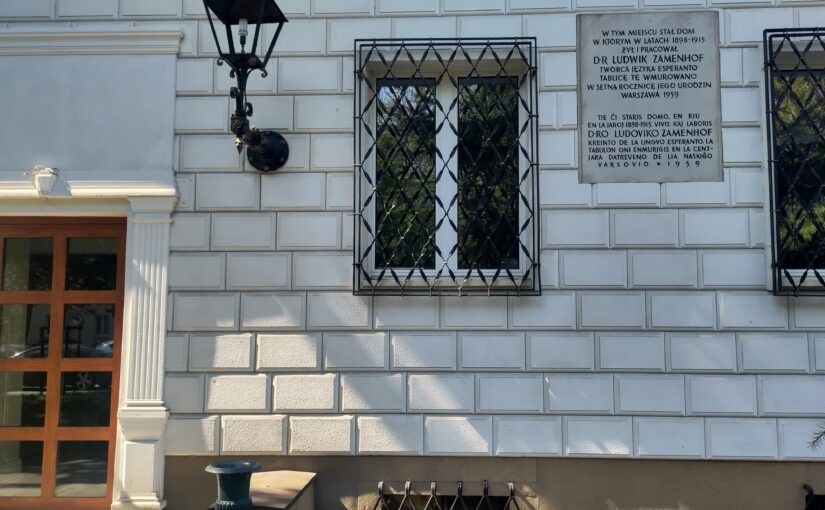
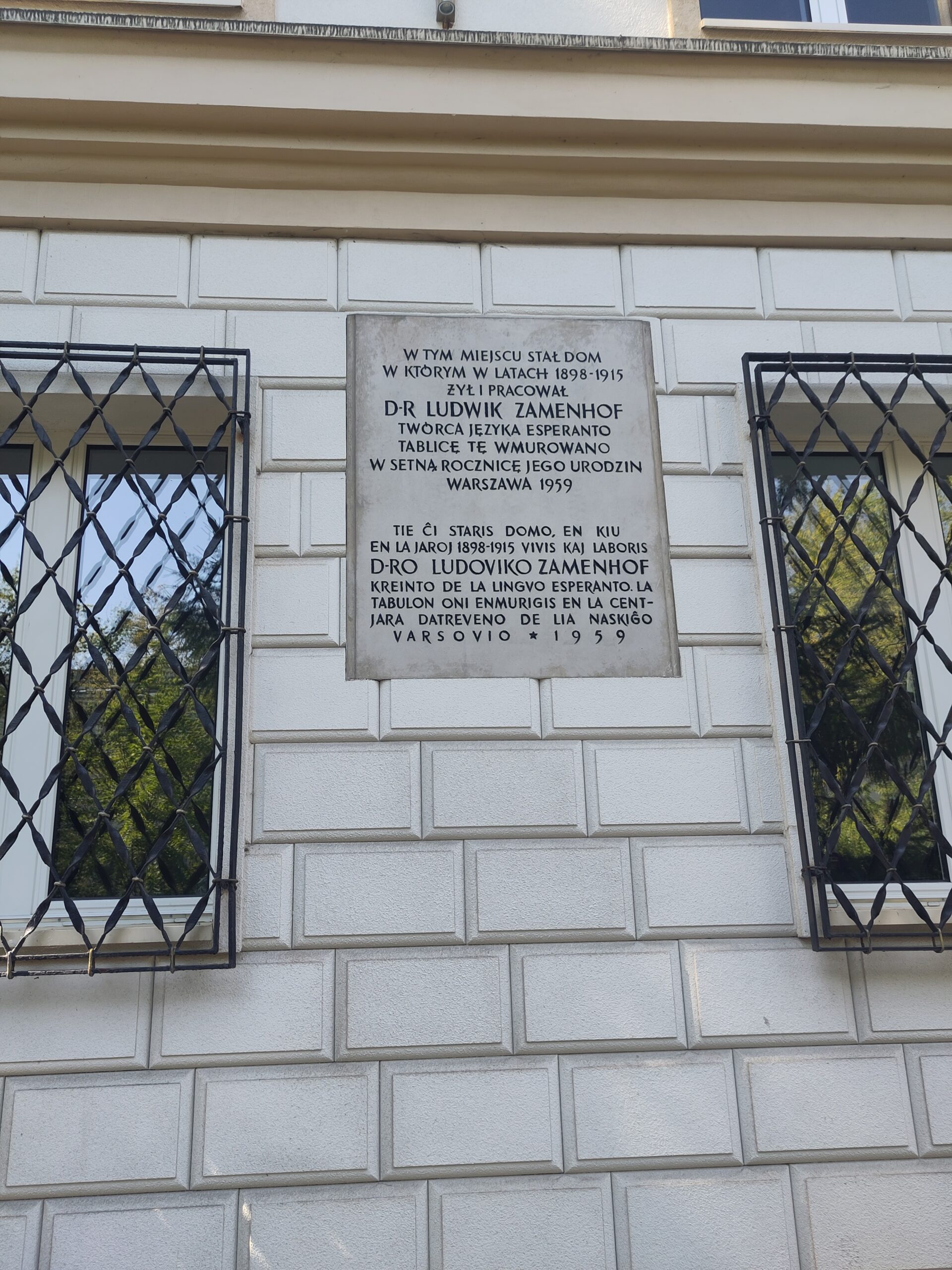
A historic marker: On this spot stood the house in which Dr Ludwig Zamenhof, creator of the Esperanto language, lived and worked, during the years 1898-1915. This marker was installed on the centenary of his birth. Warsaw * 1959
Esperanto was suppressed by Nazis, but also suppressed by Soviets. Stalin spoke a bit of it in his more radical youth, but once he had power, became concerned about the ability it gave workers to speak to one another across borders and establish links with the West. Ironically, it was also suppressed in the US for the same reasons. US speakers found themselves blacklisted. Soviet speakers might face the gulag.
However, after the death of Stalin and the end of the McCarthy hearings, there was a warming on both sides of the Iron Curtain. Stalin had not been dead very long when this marker was put up. It would have been inconceivable while he was in power.
Asked Polish trainspotters if our local train to the main station was cancelled or just late. The conversation required phone translation as the trainspotters were siblings of about ten and twelve.